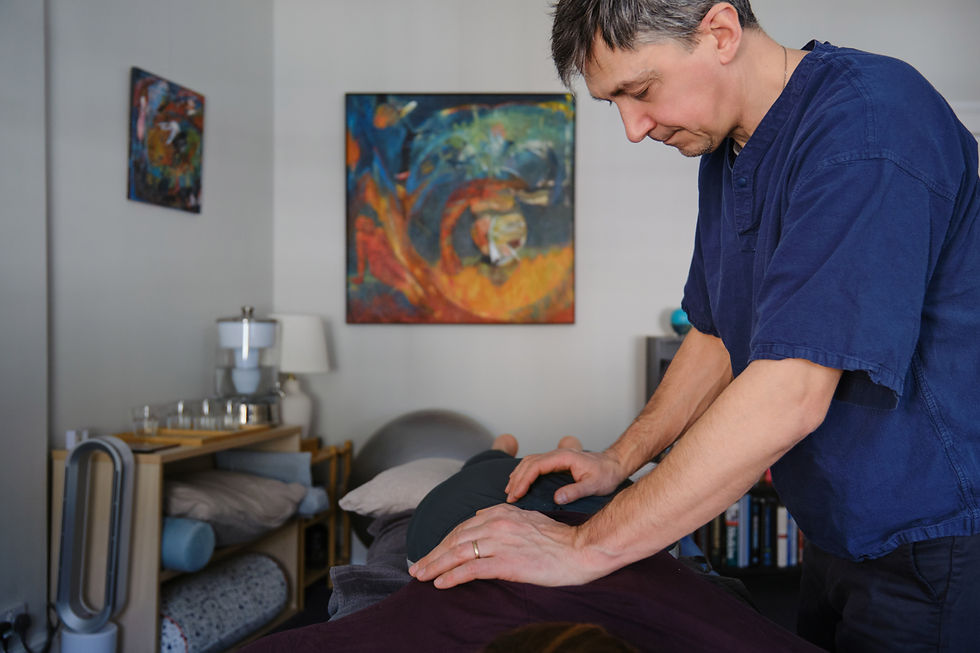
Classical Osteopathy - restoring balance naturally
Classical osteopathy, developed over a century ago, is based on the principle that the body has an inherent ability to heal and regulate itself. Rather than viewing the body as a machine made up of separate parts, it is understood as a living, interconnected system in which structure and function are closely related.
When the body is balanced and able to move freely, its natural processes—circulation, nerve function, and tissue health—can operate effectively. However, strain, injury, stress, or lifestyle factors can disrupt this balance, leading to changes in how the body functions and, over time, to pain or ill health.
Osteopathic treatment aims to identify and address these areas of restriction or imbalance. This is not limited to joints or bones, but includes muscles, connective tissues, circulation, and the nervous system. By improving alignment, easing tension, and restoring movement, treatment supports the body’s own ability to recover.
A key aspect of classical osteopathy is treating the whole person. This means considering not only the physical structure of the body, but also factors such as posture, daily habits, stress, sleep, and environment. The aim is to help the body adapt more effectively to the demands placed upon it.
Ultimately, the goal of treatment is to restore balance and coordination within the body, allowing its natural healing processes to function at their best and supporting long-term health and resilience.
Because of this, classical osteopathy can be particularly helpful for long-term, chronic health problems that have shown limited improvement with other treatments.
Treatment is gentle, relaxing, and suitable for people of all ages. It can also play an important role in supporting healthy ageing by helping the body maintain balance, mobility, and resilience over time.